Cancer immunology and immunotherapy
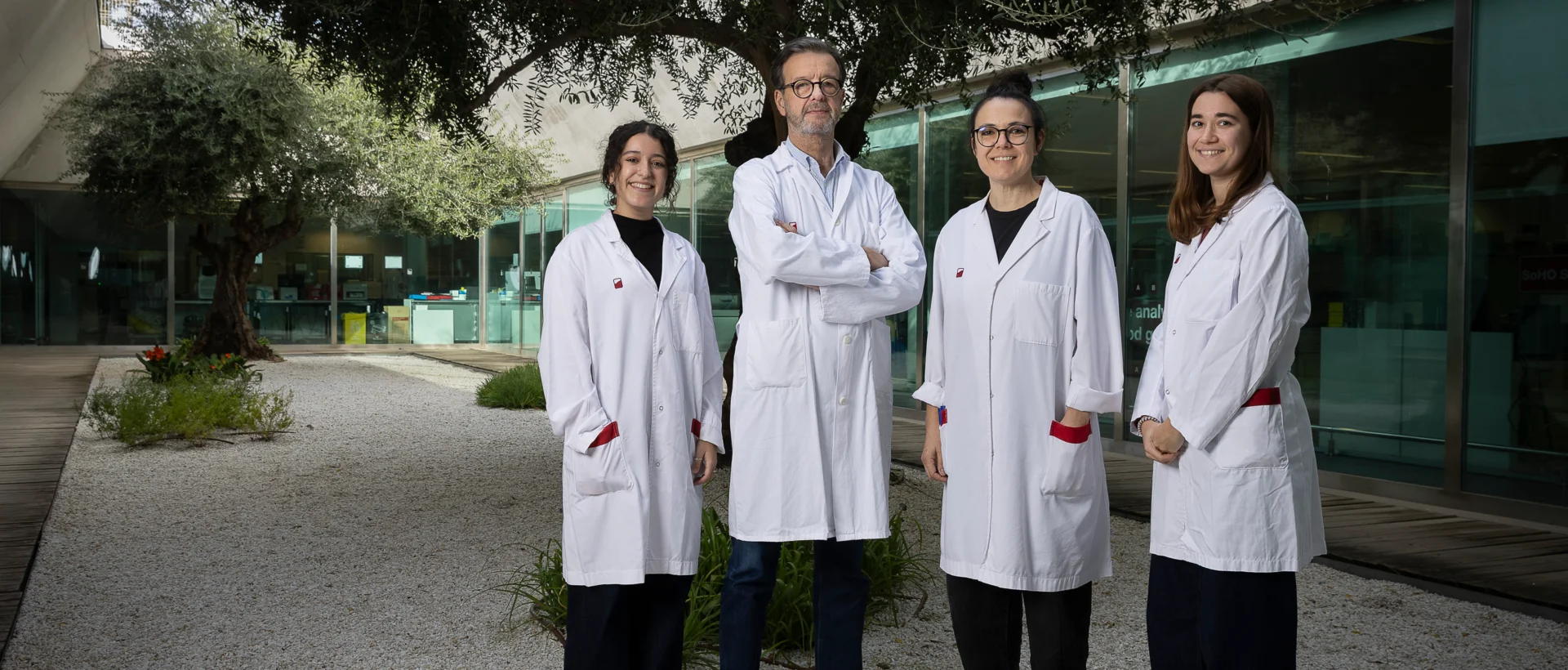
The Cancer Immunology and Immunotherapy Research Group aims to understand the mechanisms driving tumor immune evasion and resistance to immunotherapy and to translate this knowledge into innovative, safer, and more effective immunotherapeutic strategies through the integration of basic, synthetic, translational, and clinical immunology. Our research activities encompass several interconnected areas:
- Reprogramming endogenous anti-tumor T cell responses: Development of multispecific antibodies targeting immunoregulatory receptors and suppressive immune circuits. These strategies are designed to reverse T cell dysfunction, restore effective immune synapse formation, and enhance tumor-specific effector responses. Preclinical and early clinical evidence supports their capacity to synergize with established immune checkpoint blockers and overcome adaptive resistance mechanisms.
- Engineering synthetic tumor-reactive T cells to redirect T cell specificity toward tumor-associated antigens (TAAs) using bispecific T cell engagers (TCEs) and genetically encoded synthetic receptor systems. These include chimeric antigen receptors (CARs), chimeric costimulatory receptors (CCRs), and our proprietary STAb-T (Secreting T-cell Engager Antibody T-cell) platform, a next-generation cellular immunotherapy that combines engineered T cells with localized secretion of TCEs engagers to recruit endogenous bystander T cells, amplify anti-tumor immunity, and overcome tumor heterogeneity and antigen-loss escape. Collectively, these approaches enable antigen-dependent activation, localized costimulation, and functional remodeling of the tumor microenvironment.
- Development of multi-antigen immunotherapeutic platforms capable of simultaneously targeting extracellular and intracellular tumor-derived antigens. These approaches aim to mitigate tumor antigen escape, address intratumoral heterogeneity, and expand the repertoire of actionable tumor-specific targets through integrated antigen recognition strategies.
- Design and optimization of mRNA-based therapeutic modalities, including mRNA-encoded antibodies, T cell engagers, and immune-modulatory proteins. These technologies enable transient, tunable, and programmable expression of therapeutic payloads and provide a versatile framework for personalized, combinatorial, and in vivo immunotherapy approaches.
- Clinical translation: A major focus of the Group is the efficient translation of promising discoveries into clinical applications through integrated preclinical development, GMP-compliant manufacturing, regulatory engagement, and investigator-initiated clinical trials. By bridging fundamental immunology with clinical implementation, we seek to deliver next-generation immunotherapies that address resistance mechanisms and improve outcomes for patients with cancer.
Integrants
Cap de grup Luis Álvarez-Vallina
Rut Mora Buch
Antonio Tapia-Galisteo
Patricia Almendro
Javier Arroyo-Ródenas
Patricia Hernández-López
Héctor Peláez
Daniel Salas-Lloret
Elena Barba-Sarasua
Jaime Franco
Eva García-Veros
Susana Luengo-Arias
Gonzalo Raso
Lucía Rivas-Gómez
Miriam Velasco
Research Projects
Principal Investigator: Luis Álvarez-Vallina (BST)
Multi-targeted personalized STAb-T cells for effective and safe treatment of disseminated solid tumors.
- Funding organisation
Agencia Estatal de Investigación (AEI)
- File
- PID2023-148429OB-I00
- Duration
- 2024 – 2027

Principal Investigator: Luis Álvarez-Vallina (BST)
Development of the STAb cell immunotherapy for solid tumors (STAb-SOLID).
- Funding organisation
Agencia Estatal de Investigación (AEI)
- File
- SCPP2300C010827XV0
- Duration
- 2025 - 2027

Publications
-
2026
Álvarez-Vallina L, Sanz L
Anti-angiogenic therapies in cancer: from endogenous inhibitors to bispecific VEGF x PD-(L)1 antibodies.
FRONT IMMUNOL. 17:1736806. doi: 10.3389/fimmu.2026.1736806.
-
2025
Arroyo-Ródenas J, Falgas A, Díez-Alonso L, Martinez-Moreno A, Roca-Ho H, Gil-Etayo FJ, Pérez-Pons A, Aguilar-Sopeña Ó, Velasco-Sidro M, Gómez-Rosel M, Jiménez-Matías B, Muñoz-Sánchez G, Pacheco Y, Bravo-Martín C, Ramírez-Fernández Á, Jiménez-Reinoso A, González-Navarro EA, Juan M, Orfao A, Blanco B, Roda-Navarro P, Bueno C, Menéndez P, Álvarez-Vallina L
CD22 CAR-T cells secreting CD19 T-cell engagers for improved control of B-cell acute lymphoblastic leukemia progression.
J IMMUNOTHER CANCER. 13:e009048. doi: 10.1136/jitc-2024-009048.
-
2025
Battistini E, Lapuhs P, Jiménez A, Garrido-Areal S, Rivas-Gómez L, Zagorac I, Álvarez-Vallina L, Alonso MJ, Sanjurjo L
Bispecific antibodies and nanotechnology: a strategic alliance in cancer immunotherapy.
MOL CANCER. 24:292. doi: 10.1186/s12943-025-02501-9.
-
2025
Falgàs A, Lázaro-Gorines R, Zanetti SR, Rubio-Pérez L, Martinez-Moreno A, Vinyoles M, Guerrero-Murillo M, Fernandez-Fuentes N, Roca-Ho H, Tirado N, Panisello C, Velasco-Hernandez T, Mayado A, Pérez-Pons A, Genesca E, Ribera JM, Ribera J, Camos M, Ramírez-Orellana M, Anguita E, Ballerini P, Fuster JL, Juan M, González-Navarro EAA, Locatelli F, Stam RWW, Querol S, Velasco P, Ortiz-Maldonado V, Martínez-Cibrian N, Delgado J, Orfao A, Alvarez-Vallina L, Bueno C, Menendez P
A TIM-3-Fc decoy secreted by engineered T cells improves CD19 CAR-T cell therapy in B-cell acute lymphoblastic leukemia.
BLOOD. 145:2599-2613 doi: 10.1182/blood.2024025440.
-
2025
Gómez-Rosel M, Rubio-Pérez L, Zagorac I, Domínguez-Alonso C, Díez-Alonso L, Hangiu O, Navarro R, Torres-Ruíz R, Rodríguez-Perales S, Blanco FJ, Compte M, Álvarez-Vallina L, Blanco B
Simultaneous secretion of a PD-L1 x 4-1BB bispecific antibody improves antileukemic efficacy of STAb-T cells secreting a CD19-specific T-cell engager.
ONCOIMMUNOLOGY. 14:2570224. doi: 10.1080/2162402X.2025.2570224.
-
2025
Pilati D, Agyei EK, Elkhashab M, Fuchs E, Nielsen IH, Bjerg TW, Anthi AK, Jiménez-Reinoso A, Iversen MB, Pohl L, Narita R, Frago S, Jakobsen MR, Andersen JT, Degn SE, Paludan SR, Alvarez-Vallina L, Howard KA
Exploiting FcRn engagement of an albumin-CpG oligonucleotide covalent conjugate for potent TLR9 immune induction.
J BIOL CHEM. 301:108508. doi: 10.1016/j.jbc.2025.108508.
-
2025
Zagorac I, Ramírez-Fernández Á, Tapia-Galisteo A, Rubio-Pérez L, Gómez-Rosel M, Grau M, Rodríguez-Peralto JL, Álvarez-Vallina L, Blanco B
mRNA-engineered T lymphocytes secreting bispecific T cell engagers with therapeutic potential in solid tumors.
FRONT IMMUNOL. 16:1684655. doi: 10.3389/fimmu.2025.1684655.
PhD Thesis
-
“New adoptive cell immunotherapy using T lymphocytes secreting bispecific antibodies in multiple myeloma”.
Laura Diez AlonsoUniversidad Complutense de Madrid. Supervisor: Luis Álvarez-Vallina. Date: 25 April 2025. Grade: Outstanding (Sobresaliente cum laude).
-
“Multi-targeting adoptive immunotherapy based on antibody secreting CAR-T cells”.
Javier Arroyo RódenasUniversidad Complutense de Madrid. Supervisors: Luis Álvarez-Vallina and Anaïs Jiménez-Reinoso. Date: 3 November 2025. Grade: Outstanding (Sobresaliente cum laude). Doctoral Thesis with International Mention.