Genetics of bleeding disorders
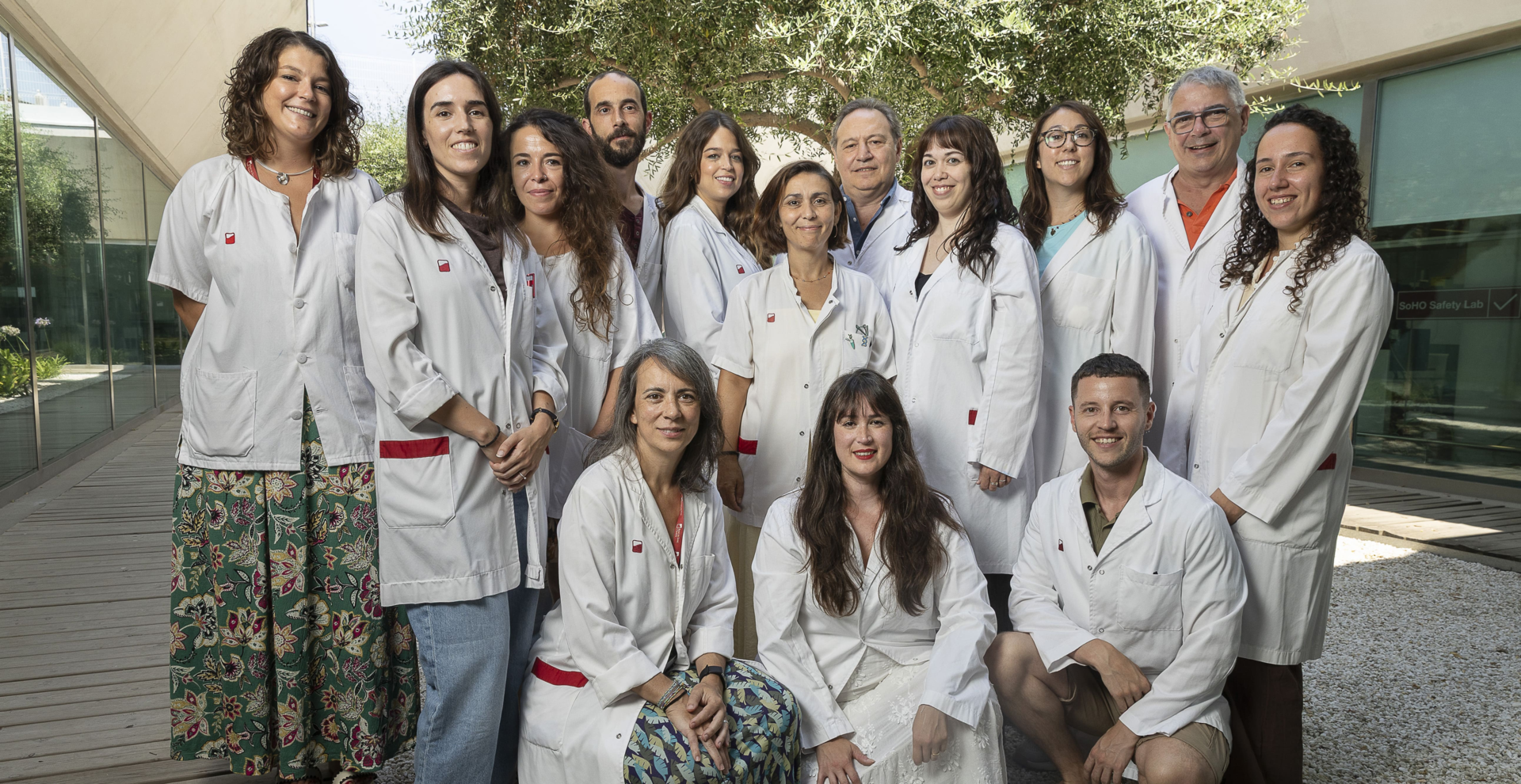
The Genetics of Bleeding Disorders Group conducts high-impact translational research focused on the molecular basis of inherited bleeding disorders, including congenital coagulopathies, platelet function disorders, and hereditary connective tissue diseases. The Group combines advanced genomic technologies with clinical expertise to improve the diagnosis, characterization, and management of these rare conditions.
Research activities are centered on the resolution of complex and unsolved cases through the integrated application of state-of-the-art genomic approaches, including next-generation sequencing (NGS), long-read sequencing, and transcriptomic analyses for the functional validation of genetic variants.
These strategies enable the identification of disease-causing variants that remain undetected using conventional diagnostic methods and contribute to a more comprehensive understanding of the genetic architecture of bleeding disorders. The Group has established a strong track record in competitive research funding, supported by multiple projects funded by the Instituto de Salud Carlos III. (ISCIII).
Current research focuses on the:
- Development of advanced molecular diagnostic tools
- Characterization of structural variants in hemophilia
- Large-scale molecular studies of von Willebrand disease (VWD).
The Group also plays a leading role in the PCM-EVW-ES clinical and molecular registry, an initiative that is helping to redefine diagnostic approaches and genotype-phenotype correlations in VWD.
Research is conducted within a highly collaborative environment, with active participation in national and international networks, including CIBERCV and expert variant curation initiatives such as ClinGen. The Group regularly contributes to major international scientific meetings, including the International Society on Thrombosis and Haemostasis (ISTH), presenting advances in complex structural variant detection, third-generation sequencing technologies, and genotype-phenotype associations.
Through close collaborations with hospitals and specialized clinical centers across Spain, the Group has access to large, well-characterized patient cohorts that facilitate the implementation of advanced diagnostic technologies in routine clinical practice. This translational framework enhances diagnostic yield, accelerates the resolution of challenging cases, and promotes the adoption of precision medicine approaches in hemostasis.
Overall, the Genetics of Bleeding Disorders Group contributes significantly to advancing the molecular diagnosis of inherited bleeding disorders, improving clinical decision-making, and generating knowledge that supports the development of more precise and personalized approaches to patient care.
Members
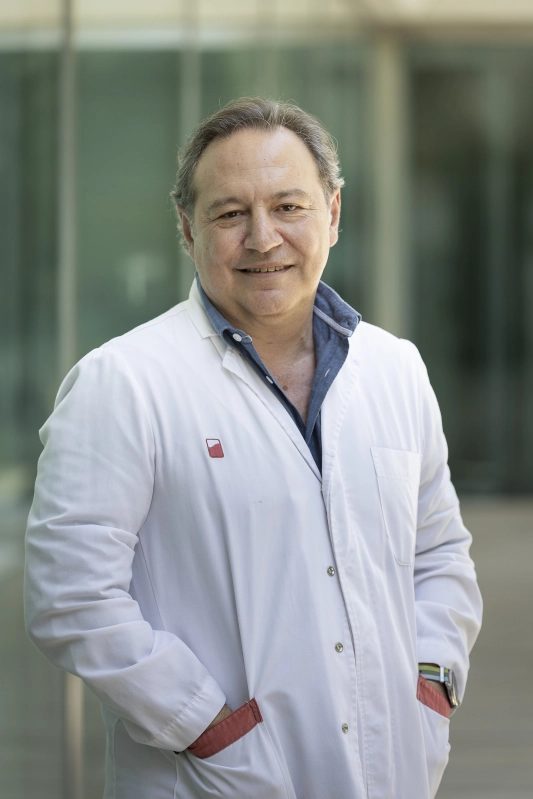
Cap de grup Francisco Vidal Pérez
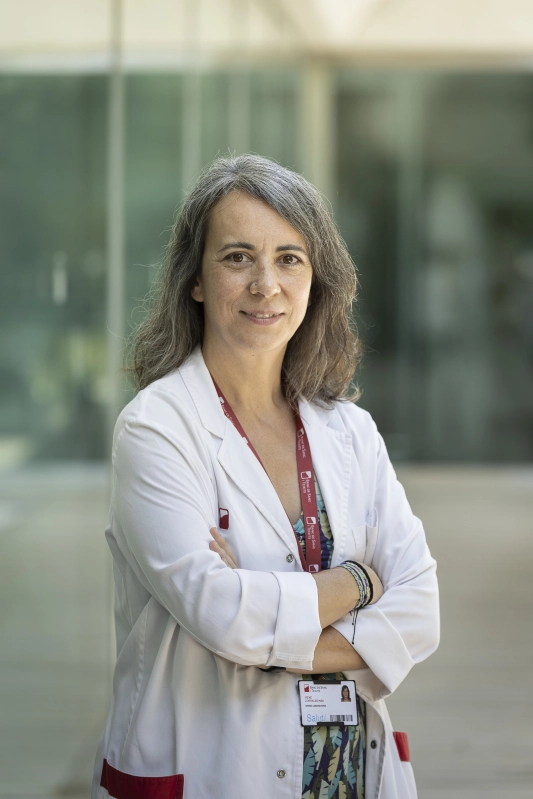
Irene Corrales Insa
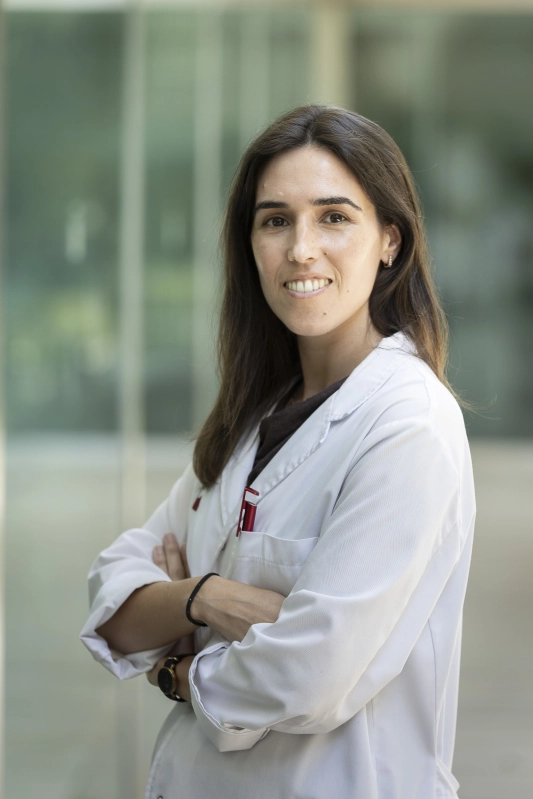
Nina Borràs Agustí
Iris Garcia Martinez
Jordi Gual Obrador

Laura Martín Fernández
Laia Closa Gil

Francisco Gracia Quiles
Perla Bandini
Carlos Hobeich Naya
Lorena Ramírez Orihuela
Natàlia Comes Fernández

Carina Lera Asensio
Noemí González León
Research Projects
Principal Investigator: Irene Corrales (BST)
Investigation of the unresolved molecular etiology of inherited bleeding disorders using advanced molecular tools and data integration systems.
- Funding organisation
Instituto de Salud Carlos III
- File
- PI23/01672
- Duration
- 2023 – 2026

Principal Investigator: Francisco Vidal Pérez (BST)
RELECOV 2.0 Consolidation of WGS and RT-PCR activities for SARS-CoV-2 in Spain towards sustainable use and integration of enhanced infrastructure and processes in the RELECOV network.
- Funding organisation
European Commission
- File
- 101113109
- Duration
- 2023 – 2025

Principal Investigator: José Martínez González, Consejo Superior de Investigaciones Científicas (CSIC)
RESolution of inflammation after myocardial injury through Targeting novel regulaTORy moleculEs (RESTORE)
- Funding organisation
Fundació La Marató de TV3
- File
- 216/C/2023
- Duration
- 2024 - 2026

Principal Investigator: Ana Belen Álvarez Palomo - BST
AMIR: Advanced Macrophage-based Immunotherapy for antibiotic-Resistant infections.
- Funding organisation
Agencia Estatal de Investigación (AEI).
- File
- SCPP2400C011561XV0
- Duration
- 2025 – 2028

Principal Investigator: Mª Cristina Rodríguez Sinovas, Institut de Recerca Sant Pau (IR Sant Pau)
ATP citrate lyase as a pharmacological target for cardiovascular diseases: Pre-clinical, clinical and omic approaches.
- Funding organisation
Instituto de Salud Carlos III (ISCIII)
- File
- : PI24/00613
- Duration
- 2025 – 2027

Principal Investigator: Dinara Samarkanova
Clinical evaluation of umbilical cord blood red blood cells for transfusion in extremely premature infants
- Funding organisation
Instituto de Salud Carlos III (ISCIII)
- File
- PI22/00290
- Duration
- 2023 – 2026

Publications
-
2026
Ayala-Pérez A, Fernández-Santos ME, Vives J
Implementation of good manufacturing practice standards in cell expansion for advanced therapy medicinal products.
MED CLIN (BARC). 166:107412. doi: 10.1016/j.medcli.2026.107412.
-
2026
Bandini P, Borràs N, Martin-Fernandez L, Vilalta N, Carrasco M, Mateo J, Benítez O, Berrueco R, Gassiot S, Bastida JM, Santos N, Salinas R, Acevedo RM, Aguinaco R, Fernandez‑Mellid E, López‑Andreoni L, Ramón O, Lucas FJ, Quintana París L, Velásquez Escandón C, Tugues A, Marcellini S, Alonso E, Parra R, Garcia‑Martínez I, Hobeich C, González N, Lera C, Comes N, Ramírez L, Vidal F, Corrales I
Unveiling the genetic landscape of inherited primary hemostasis disorders by whole‑exome sequencing: real‑life insights from a multicenter study.
THROMB HAEMOST. (In press). doi: 10.1055/a-2806-3835
-
2025
Ezquerra-Condeminas P, Martin-Fernandez L, Cardenas A, Sibila O, Borràs N, Vidal F
Gene expression profiling of whole blood samples following marathon running in non-elite athletes.
BIOLOGY OF SPORT. 2026:779-93. doi: https://doi.org/10.5114/biolsport.2026.158303
-
2025
Bandini P, Borràs N, Altisent C, Sánchez-Raya J, Martin-Fernandez L, Garcia-Martínez I, Comes N, Ramírez L, Martorell M, Hobeich C, Vidal F, Corrales I
Elucidating the Molecular Basis in a Cohort of Patients With Combined Bleeding Tendencies and Joint Hypermobility Manifestations.
HAEMOPHILIA. 32:185-194. doi: 10.1111/hae.70160
-
2025
Borràs N, Comes N, Ramírez L, Parra R, Altisent C, Lorenzo-Vizcaya Á, Marzo-Alonso C, López-Fernández MF, Canaro M, Falcón-Rodríguez M, Cortes-Vidal Á, Rios de Paz MA, Rodríguez-García JA, Moreto-Quintana A, Bandini P, Hobeich C, Corrales I, Vidal F
Integrating Next-Generation Sequencing Into Routine Molecular Diagnosis of Inherited Coagulation Factor Deficiencies: Real-World Data From Spanish Patients.
HAEMOPHILIA. 27:e70075. doi: 10.1111/hae.70075.
-
2025
Meulenbeld A, Styles C, Shuttleworth G, Manathunga S, van Remoortel H, Malard L, Brits T, Swanevelder R, García-Erce JA, Garcia-Martínez I, Karki S, Welvaert M, Russell WA, Arvas M, van den Hurk K, Pothast M, Janssen M
Potential benefits of an alternative haemoglobin deferral strategy evaluated in seven countries
VOX SANG. 121:26-34. doi: 10.1111/vox.70131.
-
2025
Pardos-Gea J, Barquinero J, Alvarez I, Cortina V, Martínez IG, Fernández LM, Vidal F
A comprehensive review of the autoimmune pathogenesis of acquired hemophilia A.
THROMB RES. 254:109444. doi: 10.1016/j.thromres.2025.109444.
-
2024
Bandini P, Borràs N, Berrueco R, Gassiot S, Martin-Fernandez L, Sarrate E, Comes N, Ramírez L, Hobeich C, Vidal F, Corrales I
Gaining Insights into Inherited Bleeding Disorders of Complex Etiology in Pediatric Patients: Whole-Exome Sequencing as First-Line Investigation Tool.
THROMB HAEMOST. 124:628-640. doi: 10.1055/s-0043-1778070.
-
2024
Closa L, Samarkanova D, Lera C, Gonzalez N, Lloret M, Codinach M, Aran G, Fernandez-Sojo J, Vidal F, Soria MG, Querol S
Development of molecular sterility assay for rapid quality release of cord blood erythrocytes units for transfusion.
TRANSFUSION. 65:140-151 doi: 10.1111/trf.18084.
-
2024
Martinez-Sanchez J, Torramade-Moix S, Moreno-Castaño AB, Llobet D, Jerez-Dolz D, Sanchez P, Carrasco M, Mojal S, Moret C, Camacho M, Soria JM, Palomo M, Martin-Fernandez L, Vidal F, Escolar G, Diaz-Ricart M, Souto JC
Increased Platelet Adhesiveness in Patients with Venous Thromboembolic Disease
TH OPEN. 8:e329-e339. doi: 10.1055/s-0044-1800798.
-
2023
Bandini P, Borràs N, Fernandez Mellid E, Martin-Fernandez L, Melero Valentín P, Comes N, Ramírez L, Cadahia Fernández P, Rodríguez Ruiz M, Perez Encinas MM, Vidal F, Corrales
First description of bone marrow failure syndrome in Spain caused by mutations in the ERCC6L2 gene.
BR J HAEMATOL. 203:e102-e107. doi: 10.1111/bjh.19050
-
2023
Bandini P, Borràs N, Berrueco R, Gassiot S, Martin-Fernandez L, Sarrate E, Comes N, Ramírez L, Hobeich C, Vidal F, Corrales I
Gaining Insights into Inherited Bleeding Disorders of Complex Etiology in Pediatric Patients: Whole-Exome Sequencing as First-Line Investigation Tool.
THROMB HAEMOST. 124:628-640. doi: 10.1055/s-0043-1778070.
-
2023
Benítez Hidalgo O, Martinez Garcia MF, Corrales Insa I, Fernández-Caballero M, Ramírez Orihuela L, Cortina Giner V, Comes Fernández N, Juarez Gimenez JC
VHrare study: Prevalence, clinical features and management of severe rare bleeding disorders in a large cohort.
EJHAEM. 4:476-482. doi: 10.1002/jha2.664.
-
2023
De la Morena-Barrio B, Palomo Á, Padilla J, Martín-Fernández L, Rojo-Carrillo JJ, Cifuentes R, Bravo-Pérez C, Garrido-Rodríguez P, Miñano A, Rubio AM, Pagán J, Llamas M, Vicente V, Vidal F, Lozano ML, Corral J, de la Morena-Barrio ME
Impact of genetic structural variants in factor XI deficiency: identification, accurate characterization, and inferred mechanism by long-read sequencing.
J THROMB HAEMOST. 21:1779-1788. doi: 10.1016/j.jtha.2023.03.009.
-
2023
Garcia-Segura S, Del Rey J, Closa L, Garcia-Martínez I, Hobeich C, Castel AB, Vidal F, Benet J, Oliver-Bonet M
Characterization of Seminal Microbiome of Infertile Idiopathic Patients Using Third-Generation Sequencing Platform. INT J MOL SCI.
INT J MOL SCI. 26;24:7867. doi: 10.3390/ijms24097867.
-
2023
Martin-Fernandez L, Garcia-Martínez I, Lopez S, Martinez-Perez A, Vilalta N, Plaza M, Moret C, Viñuela A, Brown AA, Panousis NI, Buil A, Dermitzakis ET, Corrales I, Souto JC, Vidal F, Soria JM
Multiallelic Copy Number Variation in ORM1 is Associated with Plasma Cell-Free DNA Levels as an Intermediate Phenotype for Venous Thromboembolism.
THROMB HAEMOST. 123:438-452. doi: 10.1055/s-0043-1760844.
-
2023
Pardos-Gea J, Martin-Fernandez L, Closa L, Ferrero A, Marzo C, Rubio-Rivas M, Mitjavila F, González-Porras JR, Bastida JM, Mateo J, Carrasco M, Bernardo Á, Astigarraga I, Aguinaco R, Corrales I, Garcia-Martínez I, Vidal F
Key Genes of the Immune System and Predisposition to Acquired Hemophilia A: Evidence from a Spanish Cohort of 49 Patients Using Next-Generation Sequencing.
INT J MOL SCI. 24:16372. doi: 10.3390/ijms242216372.
-
2022
Batlle J, Pérez-Rodríguez A, Corrales I, Borràs N, Pinto JC, López-Fernández MF, Vidal F
IX international curse of continuing formation in haemophilia and other congenital coagulopathies. The role of the Laboratory in coagulation disorders. Diagnosis of von Willebrand disease.
BLOOD COAGUL FIBRINOLYSIS. 33:S12-S14. doi: 10.1097/MBC.0000000000001093
-
2022
Corrales I
New approaches to the genetic study of bleeding diathesis in our center: from sanger to next-generation sequencing.
BLOOD COAGUL FIBRINOLYSIS. 33:S19-S21 doi: 10.1097/MBC.0000000000001107.
-
2022
De la Morena-Barrio B, Orlando C, Sanchis-Juan A, García JL, Padilla J, de la Morena-Barrio ME, Puruunen M, Stouffs K, Cifuentes R, Borràs N, Bravo-Pérez C, Benito R, Cuenca-Guardiola J, Vicente V, Vidal F, Hernández-Rivas JM, Ouwehand W, Jochmans K, Corral J
Molecular Dissection of Structural Variations Involved in Antithrombin Deficiency.
J MOL DIAGN. 24:462-475. doi: 10.1016/j.jmoldx.2022.01.009.
-
2022
De la Morena-Barrio B, Stephens J, de la Morena-Barrio ME, Stefanucci L, Padilla J, Miñano A, Gleadall N, García JL, López-Fernández MF, Morange PE, Puurunen M, Undas A, Vidal F, Raymond FL, Vicente V, Ouwehand WH, Corral J, Sanchis-Juan A
Long-Read Sequencing Identifies the First Retrotransposon Insertion and Resolves Structural Variants Causing Antithrombin Deficiency.
THROMB HAEMOST .122:1369-1378. doi: 10.1055/s-0042-1749345.
-
2022
Garcia-Segura S, Del Rey J, Closa L, Garcia-Martínez I, Hobeich C, Castel AB, Vidal F, Benet J, Ribas-Maynou J, Oliver-Bonet M
Seminal Microbiota of Idiopathic Infertile Patients and Its Relationship With Sperm DNA Integrity.
FRONT CELL DEV BIOL. 10:937157. doi: 10.3389/fcell.2022.937157
-
2022
Lopez S, Martinez-Perez A, Rodriguez-Rius A, Viñuela A, Brown AA, Martin-Fernandez L, Vilalta N, Arús M, Panousis NI, Buil A, Sabater-Lleal M, Souto JC, Dermitzakis ET, Soria JM
Integrated GWAS and Gene Expression Suggest ORM1 as a Potential Regulator of Plasma Levels of Cell-Free DNA and Thrombosis Risk.
THROMB HAEMOST. 122:1027-1039. doi: 10.1055/s-0041-1742169.
-
2022
Soria JM, Mojal S, Martinez-Perez A, Acosta FR, López S, Miqueleiz S, Rodriguez D, Quijada MA, Cardenas A, Vidal F, Remacha A, Antonijoan RM, Souto JC
A validated clinical-genetic score for assessing the risk of thrombosis in patients with COVID-19 receiving thromboprophylaxis.
HAEMATOLOGICA 1;107:2244-2248. doi: 10.3324/haematol.2022.281068
-
2022
Borràs N, Castillo-González D, Comes N, Martin-Fernandez L, Rivero-Jiménez RA, Chang-Monteagudo A, Ruiz-Moleón V, Garrote-Santana H, Vidal F, Macías-Abraham C
Molecular study of a large cohort of 109 haemophilia patients from Cuba using a gene panel with next generation sequencing-based Technology.
HAEMOPHILIA. 28:125-137. doi: 10.1111/hae.14438.
-
2021
Closa L, Vidal F, Herrero MJ, Caro JL
High-throughput genotyping of HLA-G, HLA-F, MICA, and MICB and analysis of frequency distributions in healthy blood donors from Catalonia.
HLA. 97:420-427. doi: 10.1111/tan.14221.
-
2021
Closa L, Xicoy B, Zamora L, Estrada N, Colomer D, Herrero MJ, Vidal F, Alvarez-Larrán A, Caro JL
Natural killer cell receptors and ligand variants modulate response to tyrosine kinase inhibitors in patients with chronic myeloid leukemia.
HLA. 99:93-104. doi: 10.1111/tan.14515
-
2021
Martínez-González J, Cañes L, Alonso J, Ballester-Servera C, Rodríguez-Sinovas A, Corrales I, Rodríguez C
NR4A3: A Key Nuclear Receptor in Vascular Biology, Cardiovascular Remodeling, and Beyond.
INT J MOL SCI. 22:11371 doi: 10.3390/ijms222111371.
-
2021
Martínez-González J, Corrales I
Earth: the planet of the annexins.
CLIN INVESTIG ARTERIOSCLER. 33:195-197. doi: 10.1016/j.arteri.2021.06.001.
-
2021
Pérez-Rodríguez A, Batlle J, Pinto JC, Corrales I, Borràs N, Garcia-Martínez I, Cid AR, Bonanad S, Parra R, Mingot-Castellano ME, Navarro N, Altisent C, Pérez-Montes R, Moretó A, Herrero S, Soto I, Mosteirín NF, Jiménez-Yuste V, Jacob AA, Fontanes E, Mateo J, Quismondo NC, Batlle F, Vidal F, López-Fernández MF
Investigators and centers involved in the PCM-EVW-ES project. Type 2N VWD: Conclusions from the Spanish PCM-EVW-ES project.
HAEMOPHILIA. 27:1007-1021. doi: 10.1111/hae.14405.
-
2021
García-López J, Delgadillo J, Vilarrodona A; Querol S, Ovejo J, Coll R, Millan A, Madrigal A, Soria G, Vidal F, Vives J, Herrero MJ, Lopez I, Sauleda S, Contreras E, Grifols JR, Guasch R, Tahull E, Puig L, Masip A, Argelagués E, Muñiz-Díaz E
SARS-COV2/COVID-19 pandemic, first round. Impact, response and lessons learnt on a fully integrated regional blood and tissue bank: a narrative report.
BLOOD TRANSFUSION. 19:158-167. doi: 10.2450/2021.0259-20.
-
2021
Vidal F
State of the art of genetic studies in hemophilia carriers.
BLOOD COAGUL FIBRINOLYSIS. 31:S4-S5. doi: 10.1097/MBC.0000000000000992.