New manufacturing platform opens door to development of future therapies based on extracellular vesicles
03/11/2026
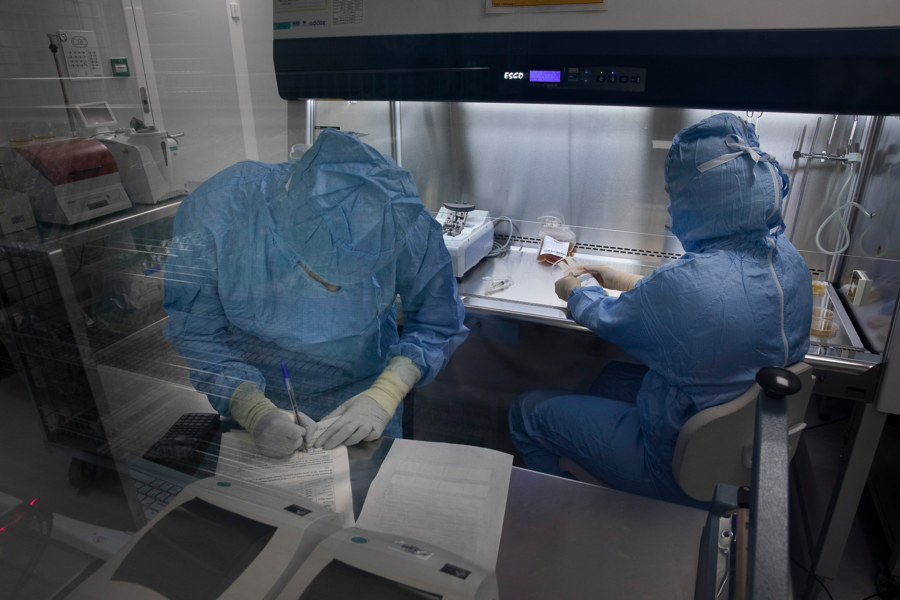
A team of researchers from the Banc de Sang i Teixits (Blood and Tissue Bank, BST) and the Heart Failure and Cardiac Regeneration (ICREC) group from the Germans Trias i Pujol Research Institute (IGTP) has developed and validated a platform for manufacturing extracellular vesicles that complies with pharmaceutical quality requirements. The study, published in the journal iScience, contributes to establishing the foundations for the development of future therapies based on these particles.
Extracellular vesicles are small particles released by cells that carry molecules capable of transmitting biological information and modulating cellular responses, such as inflammation. Mesenchymal stem cell derivatives are a type of adult stem cell that is attracting growing interest in regenerative medicine for their therapeutic potential.
One of the challenges in translating this potential into clinical practice is having standardised, reproducible manufacturing processes that allow for the production of products with consistently high-quality characteristics.
A reproducible manufacturing process
The platform developed in the study allows extracellular vesicles to be obtained from umbilical cord blood mesenchymal stem cells. The process combines a bioreactor cultivation system with two consecutive stages of concentration and purification, under chemically defined and animal-component-free cultivation conditions.
The semi-automated process, developed at an intermediate scale, enabled the reproducible preparation of samples. These characteristics were also maintained within acceptable limits during 12 months of storage at -80°C.
The platform complies with Good Manufacturing Practice (GMP) standards, a set of requirements aimed at ensuring the quality of manufacturing processes.
"Extracellular vesicle therapies could be a real revolution for medicine because they are nanoparticles capable of transporting molecules with therapeutic activity to the cells that need them, making treatments more precise and less aggressive," said Dr Joaquim Vives, from the BST.
In order for extracellular vesicles to be used in future therapies, we need manufacturing processes that allow for the production of safe and consistently high-quality products. "This platform helps us to advance in this direction," said Dr Santiago Roura, IGTP ICREC group researcher and corresponding author of the study.
A foundation for future applications
The results establish a basis for continuing to advance towards the possible clinical application of products based on extracellular vesicles. Among the potential applications is regenerative medicine and, in particular, the development of new therapies for cardiovascular diseases, one of the research lines of the ICREC group.