Umbilical cord blood donation offers increasing opportunities for treating diseases and saving lives
The Cord Blood Bank celebrates World Cord Blood Day on November 17, with the aim of reaching 1,500 donations by 2026
16/11/2026
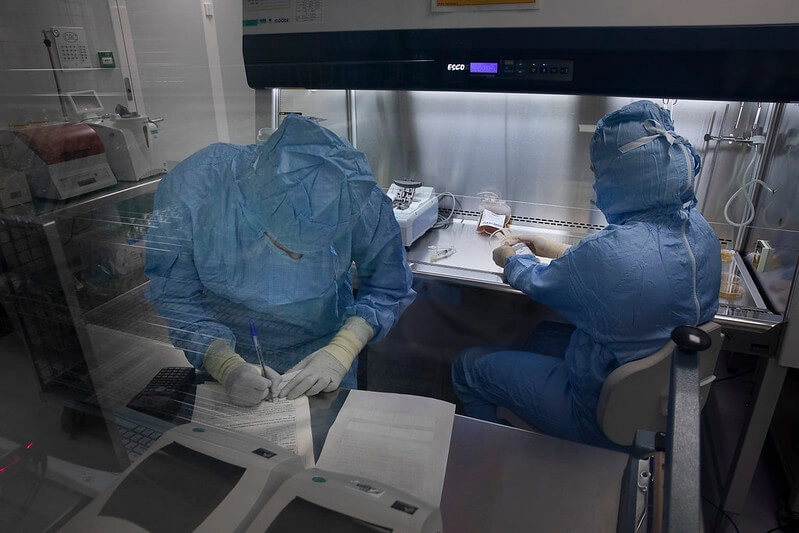
- The Cord Blood Bank has greatly expanded the therapeutic applications of umbilical cord blood over the last ten years, with therapeutic use now the most frequent
- Cord blood donations are used to produce eye drops and gels to treat eye and skin diseases and to develop new immunological and regenerative therapies
- The use of cord blood for transfusions with extremely premature babies has recently been added, a new application that is being investigated in clinical trials
- The Cord Blood Bank aims to reach 1,500 annual donations by 2026 to guarantee the continuation of patient treatments and to promote new therapeutic applications
- Since it was founded more than 30 years ago, the Cord Blood Bank has distributed more than 2,000 units for transplants to patients with leukaemia and other serious diseases around the world
The therapeutic potential of umbilical cord blood is increasingly broad and enables new treatments for numerous conditions to be developed. Since the Cord Blood Bank of the Banc de Sang i Teixits (Blood and Tissue Bank, BST) was founded more than 30 years ago, donations have allowed patients with leukaemia and other serious blood diseases to be treated. More recently, they have served to develop new applications in the field of regenerative medicine and immunotherapy, which now account for the majority of uses.
On the occasion of World Cord Blood Day, on 17 November, the BST highlighted the importance of such donations to continue providing these new therapeutic opportunities and urged expectant mothers to consider donating, given its numerous applications. By October this year, the Cord Blood Bank had received 1,111 donations, but the target is to reach 1,500 a year.
Umbilical cord blood is no longer used just for transplantation in patients with leukaemia and other serious blood diseases, the original reason Cord Blood Bank was founded, as its therapeutic applications have broadened in recent years. Today it is also used to make eye drops and gels to treat eye and skin diseases, and its potential in new immunological and regenerative therapies is also being investigated. More recently, its use in transfusions for extremely premature babies has been introduced as part of a clinical trial.
Blood with "special" properties
The blood that remains in the umbilical cord and placenta after birth has unique properties that give it considerable therapeutic potential. It is rich in stem cells, as well as other components with anti-inflammatory and regenerative properties, which can be used to develop treatments for different diseases. If a mother decides to donate, the blood can be collected after birth and used to help other patients.
In recent years, the therapeutic applications of umbilical cord blood have broadened exponentially. Today, platelet-rich plasma from cord blood is used to make eye drops to treat serious eye injuries and difficult-to-heal ulcers, and gels for the treatment of skin lesions in patients with serious skin diseases, such as the one commonly known as "butterfly skin". These treatments use the regenerative properties of cord blood components to promote tissue repair, offering new therapeutic alternatives to patients with significant medical needs.
More recently, the umbilical cord blood has also been used for transfusions in extremely premature babies with anaemia. During 2025 and 2026, the Hospital Clínic and BST have pioneered the use of this treatment in Spain in a clinical trial, with the aim of evaluating the possible benefits of cord blood transfusion compared to blood from adult donors. Previous Italian trials have shown that this strategy reduces certain complications associated with prematurity, such as retinopathy, bronchopulmonary dysplasia and necrotising enterocolitis. A multicentre study involving several neonatology units in Barcelona and a larger number of patients is planned for early 2027 to continue investigating these potential benefits. In recent years in Catalonia, nearly 500 premature babies a year have received transfusions of blood from adult donors. Thus cord blood is opening up a new opportunity to improve the treatment of the most vulnerable babies.
From transplantation to cancer immunotherapy
In addition to its use for the treatment of patients with leukaemia and other serious blood diseases and for new therapeutic applications, cord blood donations can also be sent to the BST Biobank to promote new lines of research. Thus, a single donation can open up different opportunities to help patients: from the transplant of stem cells to regenerative medicine and research into new therapies that could transform the future treatment of various diseases.
The umbilical cord is a source of cells with great potential for the development of new advanced therapies. For example, cord tissue can be used to obtain mesenchymal cells, a type of cell with regenerative and immunomodulatory properties that is being investigated for the treatment of different diseases. Several clinical trials are investigating their potential in repairing spinal cord injuries, in post-transplant complications, such as graft-versus-host disease, and in other immune system disorders. Applications of cord-derived cells in bioimplants to repair damaged cardiac tissue have also been investigated, such as the PeriCord project. Furthermore, cord blood cells offer new opportunities to develop immunotherapies against cancer.
The target: 1,500 donations by 2026
In 2025, the Cord Blood Bank received 1,199 donations, down on the figures for previous years. Over the last decade, donations have progressively decreased, in a context marked by declining birth rates and the need to continue raising awareness of the importance of donating umbilical cord blood. Given this situation, along with the new therapeutic opportunities offered by cord blood, the Bank has set itself the goal of reaching 1,500 donations in 2026, thus reversing the current trend. As of October this year, 1,111 donations have been received.
Where and how can I donate umbilical cord?
In Catalonia, umbilical cord blood can be donated at 23 public hospitals across the territory. The BST Cord Blood Bank is the public bank for six autonomous communities and Andorra, including more than 40 maternity hospitals in the Concòrdia programme. This collaboration network means over 1,000 umbilical cord blood donations can be collected each year. These are then transported to the BST processing centre in Barcelona, where they are analysed, processed and selected according to their characteristics for use in different therapeutic or research applications.
Units that meet the criteria for transplantation are frozen and made available to patients around the world through the Spanish Bone Marrow Donor Registry (REDMO), managed by the Josep Carreras Foundation and a member of the international network of donor registries.
Since the first umbilical cord blood transplant in the world was performed in 1988, this source of stem cells has enabled thousands of patients with serious illnesses to be treated. In Catalonia, the Cord Blood Bank received its first donation in 1995. In the 30 years since then, it has distributed more than 2,000 units of cord blood for transplants to patients all over the world.
To donate umbilical cord blood, expectant mothers can ask their midwife or gynaecologist for information and express their intention to donate during their antenatal care or in their birth plan. It is important to check whether the hospital where the birth is planned participates in the cord blood donation programme. Donation is voluntary and altruistic, and is carried out only when the circumstances of the birth allow it, as the health of both mother and baby are prioritised at all times. For information on participating centres, visit the BST website here.