The BST and the Hospital del Mar Research Institute unite research and production to bring treatments to patients faster
29/10/2025
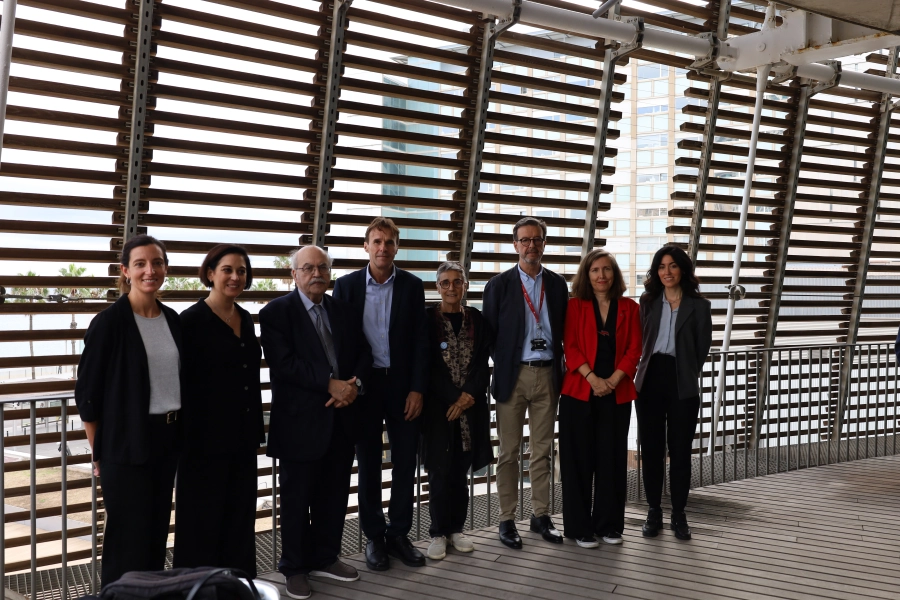
Today, the Banc de Sang i Teixits (Blood and Tissue Bank, BST) and the Hospital del Mar Research Institute presented the new Cell and Substances of Human Origin (SoHO) Therapy Programme, a key step in a strategic framework that links basic science, technological innovation and clinical practice to develop personalised, cell-based treatments for diseases that currently have no curative treatment. They are what are known as cell therapies.
The director of the Hospital del Mar Research Institute, Dr Joaquín Arribas, and the programme's scientific director, Dr Luis Álvarez-Vallina, also director of research at the BST, explained that the aim of the collaboration is to champion first-rate scientific innovation from a multidisciplinary perspective while facilitating its clinical application in order to accelerate its impact on patients. That is to say, to turn all this innovation into therapeutic products for immediate clinical use in patients who currently have no other therapeutic options.
The programme presentation was attended by the Minister for Health, Olga Pané, and the Director-General for Research, Teresa Sanchís, as well as BST director Anna Millan, along with representatives of other scientific institutions in Catalonia.
A unique research ecosystem
The programme is clearly aimed at strengthening the translation of scientific research into concrete clinical applications and accelerating the delivery of therapies to patients. Dr Luis Álvarez-Vallina, BST scientific director and HMRIB group leader, summed up the basic objectives: "We had two: to generate innovation and act; a unique partnership that is possible thanks to the researchers, as well as the role of the BST, which has the best cell production facilities in Catalonia". The BST leads the Catalan Platform for Advanced and Emerging Therapies, and in this regard, Álvarez-Vallina highlighted that "we want this entire initiative to be a driver of innovation, but at the same time, to have a very pragmatic translation and reach patients quickly, producing and making the treatments a reality in the BST cleanroom facilities".
It is a programme that represents a firm commitment to the medicine of the future, using cells or modified tissues to prevent or cure pathologies that do not respond to conventional treatments. In recent years, its use has saved the lives of thousands of patients with cancer or rare diseases, and its potential is growing exponentially.
Dr Joaquín Arribas, director of the Hospital del Mar Research Institute, described the spirit of the programme by stating that "it is much more than a research project: it is furthering science that changes lives. It brings together the talent of our researchers, the production capacity of the BST, the clinical experience of the Hospital del Mar and the institutional drive of Catalonia to bring the most innovative therapies to patients."
The programme brings together a total of eleven research groups of excellence, led by Doctors Joan Albanell, Luis Álvarez-Vallina, Joaquín Arribas, Anna Bigas, Toni Celià-Terrassa, Jordi Jiménez-Conde, Jaume Marrugat, Clara Montagut, Aura Muntasell, Jana Selent and Pablo Villoslada. However, it also opens the door to attracting young research talent and, above all, to being able to count on the collaboration of research teams from other research institutes.
It adopts a multidisciplinary viewpoint, ranging from molecular biology and immunology to neuroscience, clinical oncology, genetics and structural bioinformatics. This allows it to integrate the entire innovation cycle, from laboratory-based discovery and preclinical development to clinical validation, with the first clinical trials.
To make this a reality, the programme is structured around three complementary scientific pillars.
- Next-generation T cell immunotherapy. Developing more potent and safer therapies based on engineered T cells (CAR-T), capable of recognising multiple targets simultaneously and overcoming tumour defence mechanisms.
- Stem cell and blood engineering. Seeking to produce fully functional blood stem cells in the laboratory, with which to develop new gene therapies and enable the manufacture of artificial blood components for clinical use.
- Precision medicine for advanced cell therapies. Combining genetic and epigenetic information from large groups of people to identify markers that help select the most appropriate treatment for each patient.
The programme already includes academic clinical trials funded by the Spanish Association Against Cancer (AECC) and the Carlos III Health Institute.