Dr Rut Mora, researcher at the BST, advances our understanding of the immune system's natural mechanisms for fighting viruses, infections and tumours
The journal "Nature Immunology" publishes this key article in the field of immunology
02/12/2025
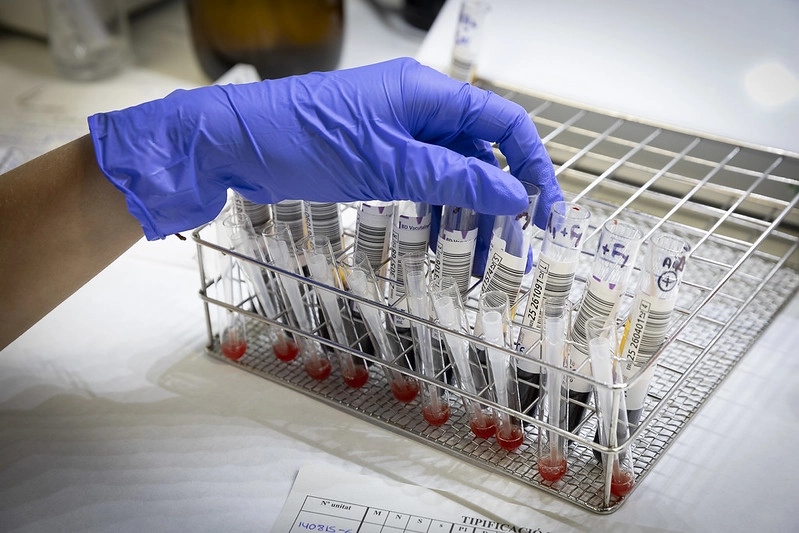
- The study, published in the world-leading journal Nature Immunology, opens the door to more effective cell therapies for serious diseases and sheds light on new mechanisms of behaviour in the immune system's memory T cells.
- A previously unexplored behaviour of T lymphocytes, key in fighting infections and abnormal cells in the body, has been discovered in which they remain in the affected tissue and attack rapidly if there is a second infection or the reappearance of latent abnormal cells
- The BST has been developing and producing cell therapies based on these lymphocytes for years
The Banc de Sang i Teixits (Blood and Tissue Bank, BST) focuses part of its work on basic research to determine the keys to the immune system's functioning against viruses and tumours, with the aim of improving cell therapies that have a direct clinical application for patients.
In fact, immunotherapy is one of the fields of medicine on which teams of scientists from around the world are currently focusing their work, given the hopes for the future it offers in the fight against many serious diseases. Immunotherapy is a treatment that can be personalised and helps the body's defence system (the immune system) to better recognise and attack invading cells in the body.
Dr Rut Mora Buch, a researcher at the BST and a member of the laboratory for immunogenetics and advanced cell therapy research, has signed as the first author of a leading study on the behaviour of memory T lymphocytes, published this year in the journal Nature Immunology, a world-leading journal in the field. The discovery, made during the researcher's postdoctoral stay at Massachusetts General Hospital/Harvard Medical School in Boston, is part of the BST's research into improving the generation of virus-specific T lymphocytes for use as a therapy.
Research has uncovered one of the immune system's natural mechanisms for controlling which memory T cells continue to circulate and which remain resident in the tissue that has been infected; they are molecules that regulate the behaviour of these specific T lymphocytes (trained against a type of 'invading' cell), causing them to remain in the initially affected tissue and not return to the circulating bloodstream. These defensive cells (T lymphocytes) are fundamental in immunotherapy because they are immune system cells specialised in recognising and destroying abnormal cells, including cancerous ones.
Defences that remain in the tissue as an immediate immune barrier
The mechanisms that control this behaviour have not yet been explored and are particularly interesting for stimulating the immune system's fight against tumours or infections, because the presence of specific T lymphocytes in situ allows for a much faster and more immediate response in the event that any remaining abnormal cells or latent viruses become reactivated. "Until now, a lot of attention has been focused on circulating memory T cells, but we are now trying to understand how these tissue-resident T cells function in their natural state to see how we can apply this to cell therapies in which these T cells are infused into patients," said Dr Mora Buch. In practice, the aim of the BST is to be able to implement this new knowledge into virus-specific T lymphocytes from a healthy donor, in order to expand them, make them proliferate in the laboratory and thus activate and infuse them as a cellular immunotherapy in patients who cannot control the infection.
"We now have to try to use this information to apply it to the therapies we are developing, and make these T lymphocytes stay in the organs or tissues, to make them faster and more effective in fighting certain viruses or tumours," said the researcher.
The BST's research into antiviral cell therapy using T cells is not new. The BST, the Hospital de la Fe in Valencia and the Vall d'Hebron Institute of Oncology (VHIO) led the first clinical trial over 5 years ago with an antiviral cell therapy produced in Spain, which consisted of administering allogeneic specific T lymphocytes - that is, selected from donors - for the treatment of cytomegalovirus (CMV) infections.
Among the research currently being carried out by the team at the BST laboratory dedicated to immunogenetics and advanced cell therapy, a key project is the production of T lymphocytes specific to the BK virus, with the aim of obtaining more doses and a higher proportion of virus-specific cells.
Defence donors, indispensable in cell therapies
Cellular therapies are made possible by healthy volunteer cell donors who have been shown to have had and overcome certain infections. Therefore, they are donors who have good immune memory against a specific virus and can help patients who need it. These are donors from the ReDoCel register who are available to donate leukocytes (white blood cells) when called upon.
ReDoCel is the only defence donor registry in the State and was created by the BST and the Transfusion Centre of the Valencian Community in 2017. This register allows the BST to select the optimal donor for the manufacture of a cell therapy medicinal product, the "ViroTCell", which is used to treat opportunistic infections in transplant recipients when they have no other treatment alternative.